
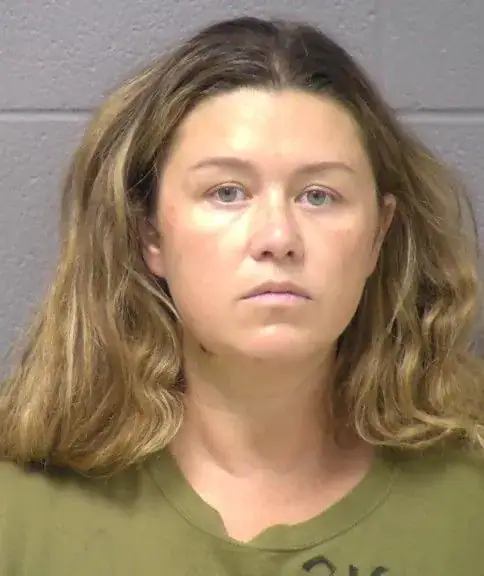
Corie Walsh
Corie Walsh was a 40-year-old mother of four living with her family in Frankfort, Illinois, when her 2-year-old son, Barrett “Bear” Walsh, was found critically injured inside the family’s Brook Stone Court home on September 1, 2026. Prosecutors allege Barrett had been suspended in the basement with a ligature around his neck and died from asphyxia caused by ligature compression. Walsh was found upstairs in a bathtub suffering from self-inflicted injuries and was taken to a hospital for treatment.
In the hours before Barrett’s death, Walsh had been participating in a group text conversation about the Lindsay Clancy murder trial in Massachusetts, a case in which mental illness and postpartum psychosis were central issues. Friends later described a change in Walsh’s messages before the incident. Prosecutors subsequently alleged that Walsh made disturbing statements about Barrett, her surviving children, and her husband, while her defense maintained that she had been experiencing a severe psychotic episode.
Walsh was charged with three counts of First Degree Murder in Will County. The case quickly drew national attention because of the circumstances of Barrett’s death, Walsh’s alleged statements, her reported focus on the Clancy trial and the developing dispute over her mental state at the time of the killing. She was later ordered detained pending trial.
Timeline
March 24, 1986
- Corie A. Walsh was born. Will County court records list her birth date as March 24, 1986. By September 2026, Walsh was living with her husband and children on Brook Stone Court in Frankfort, Illinois.
March 26, 2024
- Barrett Walsh was born. Barrett, who was known as “Bear,” was two years old when he died in September 2026.
Before September 1, 2026
- Walsh was married, had four children, and lived in Frankfort, Illinois. Her household included Barrett, an infant, and two school-aged children. Court records state that Walsh’s husband also lived in the home.
- Witnesses later told investigators that Walsh had recently become “very invested” in the Lindsay Clancy murder trial, which was taking place in Massachusetts. Clancy was accused of killing her three children, and mental illness was a central issue in her defense. Walsh was actively discussing the case with friends in a group text in the hours before Barrett’s death. Source
September 1, 2026
- During the morning and early afternoon, Corie Walsh was at the family’s home on Brook Stone Court in Frankfort, Illinois. Her husband was out of state. An infant was inside the home, while two school-aged children were away. Source
- Walsh had recently become “very invested” in the Lindsay Clancy murder trial and was participating in a group text conversation with friends about the case. Source
- Until approximately 12:30 p.m., Walsh remained active in the group text discussing the Clancy case. Prosecutors later noted that this was approximately three and a half hours before the scene at Walsh’s home was discovered. Source
- 12:30 p.m. and before approximately 4:04 p.m., prosecutors allege Walsh killed her 2-year-old son, Barrett “Bear” Walsh, inside the family home. Court records do not establish a precise time for Barrett’s death. Source
- Prosecutors allege Barrett was placed in the basement, where he was found hanging from a device attached to a rafter with a ligature around his neck. Source
- The criminal allegations state that Barrett died from asphyxia caused by ligature compression of the neck. Source
- An 8-month-old infant was also inside the home during the incident. Prosecutors later said the infant had been left unsupervised upstairs but was physically unharmed. Source
- Walsh’s two school-aged children returned home from school around the time the incident was being discovered. Her husband remained out of state. Source
- A 17-year-old neighbor was called to the Walsh home and entered the residence. The neighbor found Barrett hanging in the basement. Source
- The neighbor removed Barrett from the ligature, lowered him, and began performing CPR. Barrett reportedly had no pulse. Source
- The neighbor also encountered Walsh upstairs. Prosecutors allege Walsh was actively harming herself with a knife. Source
- The neighbor took the knife away from Walsh and threw it into the sink. Walsh allegedly told the neighbor that she was trying to kill herself. Source
- Walsh then indicated that “Bear” was in the basement. “Bear” was Barrett’s nickname. Source
- 4:04 p.m., Frankfort Police officers were dispatched to the 22700 block of Brook Stone Court after the neighbor called 911 concerning an unresponsive child. Source
- When officers arrived, the teenage neighbor was still performing CPR on Barrett. Emergency personnel continued efforts to revive him. Source
- Officers were directed upstairs, where they found Walsh in the master-bedroom bathroom. Source
- Walsh was found fully clothed in a bathtub containing bloody water and had injuries to her wrists and thighs. Source
- Prosecutors allege Walsh told responding officers that she had killed Barrett because she believed he was the “devil” and the “anti-Christ.” Source
- Barrett was transported from the home to a local hospital while emergency personnel continued lifesaving efforts. Source
- Walsh was also transported to a hospital for treatment of injuries sustained during the apparent attempt to harm herself. Police said the injuries were not life-threatening. Source
- 4:48 p.m. Barrett was subsequently pronounced dead. Investigators determined that he had died from asphyxia caused by ligature compression of the neck. Source
- During the subsequent investigation, prosecutors alleged that Walsh made additional statements describing how she killed Barrett. They said those statements were consistent with evidence recovered from the scene. Source
- Investigators recovered Walsh’s cellphone, and prosecutors later said the device was being forensically examined, including her communications surrounding the Lindsay Clancy trial. Source
- Prosecutors later alleged Walsh also made statements indicating that she believed she had killed her other children, although all three surviving children were physically unharmed. Source
- Walsh allegedly stated that she intended to harm her husband when he returned home, saying she would “poison him with a drink.” Prosecutors said investigators found drinks and multiple prescription bottles inside the home. Source
- Walsh’s husband returned to Illinois after learning what had happened. The three surviving children were unharmed. Source
September 2, 2026
- 9:16 a.m. The Frankfort Police Department issued a public statement regarding the homicide investigation in the 22700 block of Brook Stone Court in Frankfort, Illinois. Police said officers had been dispatched at approximately 4:04 p.m. on September 1 for a report of an unresponsive juvenile. Upon arrival, officers found a 2-year-old child at the residence while CPR was being administered. Source
- The child was transported to a local hospital, where the child was later pronounced dead. Officers also found the child’s mother at the home attempting self-harm. She was transported to a hospital with non-life-threatening injuries. Police stated that the preliminary investigation indicated the death was a domestic-related homicide and that the investigation was ongoing. Source
- The Will County Coroner’s Office, under Coroner Laurie H. Summers, announced that an autopsy had been performed on Barrett that day. Source
- The office stated that the Frankfort Police Department and Will-Grundy Major Crimes Task Force were investigating the death. The final cause and manner of death were to be determined after completion of the autopsy, police investigation, and toxicology reports.
- The preliminary findings determined that he died from asphyxia due to ligature compression of the neck.
- Barrett’s death was investigated as a homicide.
September 3, 2026
- Frankfort Police Detective L. Wakefield signed a criminal complaint formally charging Walsh in connection with Barrett’s death. The case was filed in Will County Circuit Court as 2026 CF 1614. Source
- Count I, First Degree Murder: Prosecutors alleged that Walsh, without lawful justification and with the intent to kill or cause great bodily harm, caused Barrett’s death through asphyxia from ligature compression of his neck. The count specifically identified Barrett as a person under 12 years old.
- Count II, First Degree Murder: Prosecutors alleged that Walsh caused Barrett’s death through ligature compression while knowing that her act would cause his death.
- Count III, First Degree Murder: Prosecutors alleged that Walsh caused Barrett’s death while knowing her actions created a strong probability of death or great bodily harm.
- A judge found probable cause and issued an arrest warrant for Walsh on the three First Degree Murder counts. Source
- The warrant ordered Walsh to be held without release and brought before the court for a pretrial detention or conditions-of-release hearing.
- Walsh remained hospitalized when the warrant was issued. The State’s detention filing states that she remained at Silver Cross Hospital as of September 3.
September 4, 2026
- 10:06 a.m. The criminal complaint was formally filed with the Will County Circuit Court. Source
- 11:07 a.m. The Frankfort Police Department announced that Corie A. Walsh, 40, had been charged with three counts of First Degree Murder following the death of her 2-year-old son. Police said the charges followed an investigation by the Frankfort Police Department and the Will-Grundy Major Crimes Task Force. Walsh remained in custody and was being held for medical treatment. Source
- Police stated that once she was released from treatment, she would be transferred to the Will County Adult Detention Facility to await a detention hearing. The department also confirmed that three other juveniles were inside the home and were unharmed. Police said the investigation remained ongoing.
- 12:26 p.m. Prosecutors filed a Petition to Deny Pre-Trial Release, asking the court to keep Walsh detained while the case was pending. Source
- The State argued that Walsh represented a specific, real, and present threat to her husband and three surviving children.
- Prosecutors relied not only on Barrett’s death but also on Walsh’s alleged statements concerning harming her remaining children and harming her husband when he returned home.
- The State asserted that because of Barrett’s age and the charged circumstances, Walsh faced a potential sentencing range of 60 to 100 years, served at 100 percent, if convicted.
- Attorneys Robert J. Kerr and Andrea Lyon entered appearances as Walsh’s private counsel. Source
- Lyon publicly said Walsh had been experiencing a psychotic episode at the time of the incident. Source
September 5, 2026
- Newly released court records provided additional details about the basement scene, Walsh’s condition in the bathroom, her alleged statements to police, and her recent focus on the Lindsay Clancy trial. Source
- The case drew national attention because Walsh had been discussing the Clancy case only hours before Barrett was discovered. Authorities and prosecutors did not establish that the Clancy case caused or inspired Barrett’s death. Source
September 6, 2026
- National reporting detailed prosecutors’ allegation that Walsh had become “very invested” in the Lindsay Clancy trial before Barrett’s death and had been actively discussing the case with friends. Source
- Walsh’s defense publicly maintained that she had been experiencing a severe psychiatric episode and that the case should not be characterized as a deliberate imitation of the Clancy case. Source
September 8, 2026
- Walsh appeared in Will County Circuit Court in Joliet for her first major court hearing following the murder charges. She appeared in custody, wearing restraints. Source
- Prosecutors asked the judge to grant their petition to deny Walsh pretrial release. Source
- Walsh’s attorneys argued that she should instead be permitted to receive inpatient psychiatric treatment, maintaining that she had been experiencing a psychotic episode at the time of Barrett’s death. Source
- The defense argued that Walsh’s conduct and statements following Barrett’s death were evidence of a serious psychiatric crisis. Source
- Prosecutors presented the court with allegations that Walsh had made statements about poisoning her husband and harming her other children. Source
- The prosecution argued that even if Walsh had been suffering from mental illness, the circumstances surrounding Barrett’s death and the alleged threats against other family members demonstrated that she posed a real and present danger. Source
- The court found by clear and convincing evidence that the dangerousness standard for pretrial detention had been satisfied.
- In reaching its decision, the court specifically checked findings concerning the nature and circumstances of the charged offense, the identity of people to whom Walsh was believed to pose a threat, and statements made by or attributed to Walsh.
- The court ordered Walsh detained in the custody of the Will County Sheriff pending trial. Source
- The court ordered that Walsh’s detention be reviewed at each subsequent appearance to determine whether continued detention remained necessary.
- A Mittimus Order Remanding Custody formally committed Walsh to the Will County Sheriff’s custody until further order of the court. Source
- The court authorized defense attorneys Andrea Lyon, Robert Kerr, Lindsay Dreis and Kate Cohn to have contact visits with Walsh at the Will County Jail. They were also permitted to bring laptops, charging cords, and external hard drives for those visits, subject to jail rules and regulations.
- Prosecutors also sought restrictions on public statements concerning the case, arguing that extensive publicity and public statements about Walsh’s mental condition could prejudice future proceedings.
- The prosecution specifically cited public statements characterizing Walsh as having experienced a psychotic episode, arguing that psychiatric conclusions had been publicly discussed before formal discovery and independent forensic evaluation.
- Rather than imposing the broader restrictions prosecutors requested, the court ordered all parties to comply with Illinois Supreme Court Rule 3.6, which governs potentially prejudicial extrajudicial statements by attorneys.
- Walsh’s next hearing was scheduled for September 24, 2026, at 9:00 a.m. in Courtroom 405.
September 10, 2026
- Walsh’s defense publicly rejected suggestions that Barrett’s death was a “copycat” killing inspired by the Lindsay Clancy case, describing that characterization as baseless. Source
September 24, 2026
- 9:00 a.m., Walsh is scheduled to return to Will County Circuit Court in Courtroom 405. Her continued detention is subject to review at subsequent court appearances.